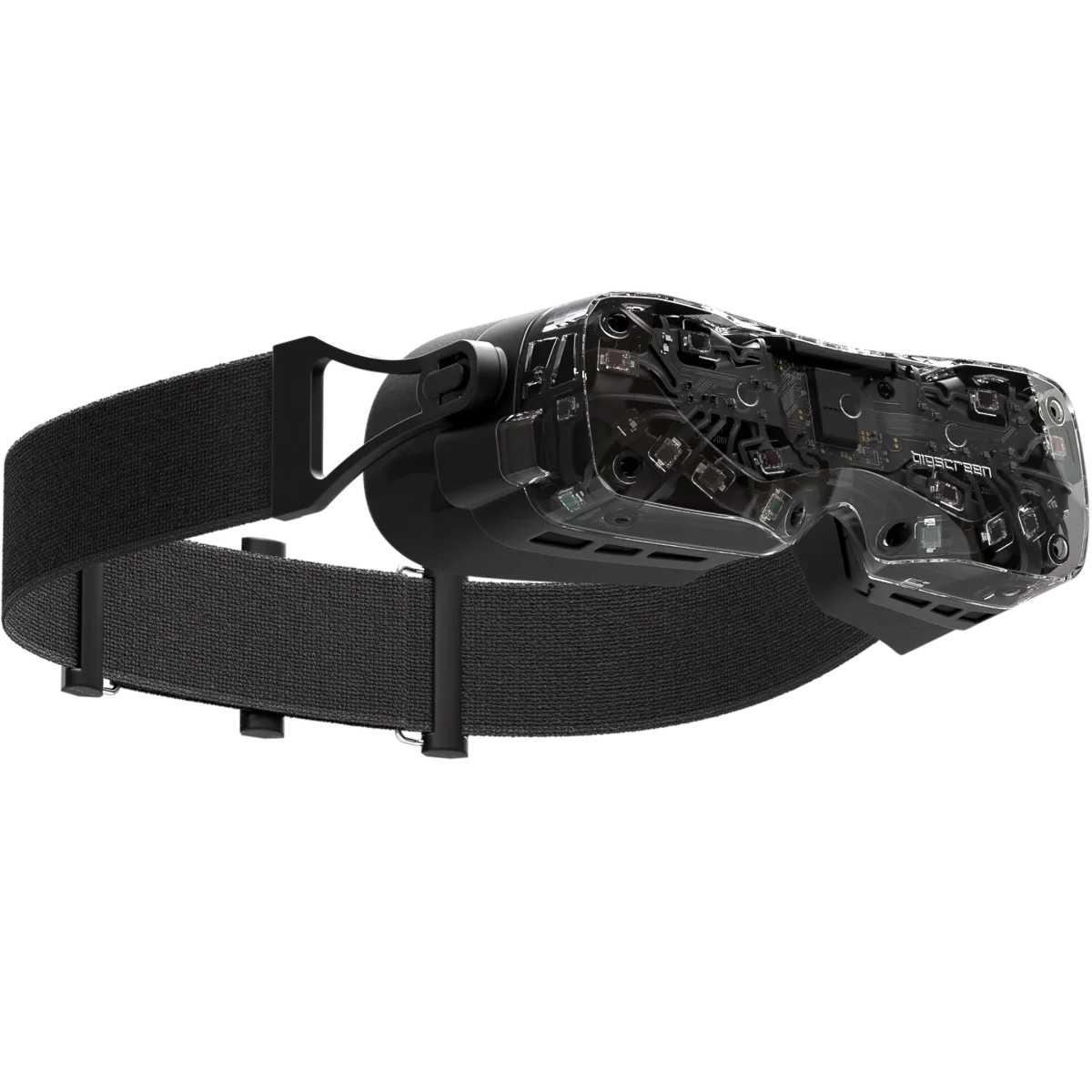
Bigscreen Beyond 2
9.0Excellent · out of 10- 32 PPD, OLED, 108°
- PC connection: native displayport
- Checked price: $959
Images: manufacturers
Spec-sheet comparison, not a hands-on test. We have not tried the Bigscreen Beyond 2 ourselves: the score and details are based on the official Bigscreen spec sheet and dated US prices.
Base model without eye tracking, with the Universal-Fit Light Seal; base stations and controllers not included
9.0Excellent · out of 10107 grams. The Beyond 2 shares the lightest weight in our VR data with its eye-tracking sibling, and it's built for pilots whose hands live on real controls: no VR controllers in the box, and Bigscreen itself notes that flight sims can be played with a HOTAS alone. $959 with the cheapest face interface.
US price checked on October 29, 2026
“Bigscreen Beyond 2: breakthrough optics & eyetracking in 107 grams” · Video by Bigscreen (official channel) on YouTube
| Brand | Bigscreen |
|---|---|
| Model | Bigscreen Beyond 2 |
| Version | Base model without eye tracking, with the Universal-Fit Light Seal; base stations and controllers not included |
| Type | PC VR headset (wired) |
| Display | Micro-OLED (500,000:1 contrast stated), pancake optics |
| Resolution per eye | 2560 × 2560 |
| Pixels per degree | 32 PPD |
| Field of view | 108° horizontal × 96° vertical |
| Max refresh rate | 75 or 90 Hz |
| PC connection | DisplayPort 1.4 with DSC + 2× USB 3.0, through the Link Box and a 5 m fiber-optic cable |
| Tracking | SteamVR Lighthouse: at least one base station 1.0 or 2.0 required, not included |
| Eye tracking | No |
| Controllers included | No |
| Weight | 107 g, headset only (no strap or cable) |
| Warranty | 1-year limited warranty |
PC VR headset (wired). PC connection: DisplayPort 1.4 with DSC + 2× USB 3.0, through the Link Box and a 5 m fiber-optic cable. Flight controls (HOTAS, yoke, rudder pedals) connect to the PC and work alongside the headset.
Score out of 10, calculated in the VR headset category from the official spec sheet and the checked US price, then placed on our editorial scale. Not a hands-on test. Missing criteria are removed and weights renormalized.
| Raw score (weighted average) | 8.1/10 |
|---|---|
| Displayed score (editorial scale) | 9.0/10 |
| Clarity (PPD or resolution) (25%) | 7.5/10 |
|---|---|
| Horizontal field of view (10%) | 7.2/10 |
| Display type (15%) | 10.0/10 |
| Max refresh rate (5%) | 6.0/10 |
| PC connection (15%) | 10.0/10 |
| Tracking (5%) | 7.0/10 |
| Eye tracking (5%) | 5.0/10 |
| Weight (5%) | 9.9/10 |
| Price (15%) | 7.1/10 |
VR headset, rated "Excellent" by our scoring: 9.0/10.
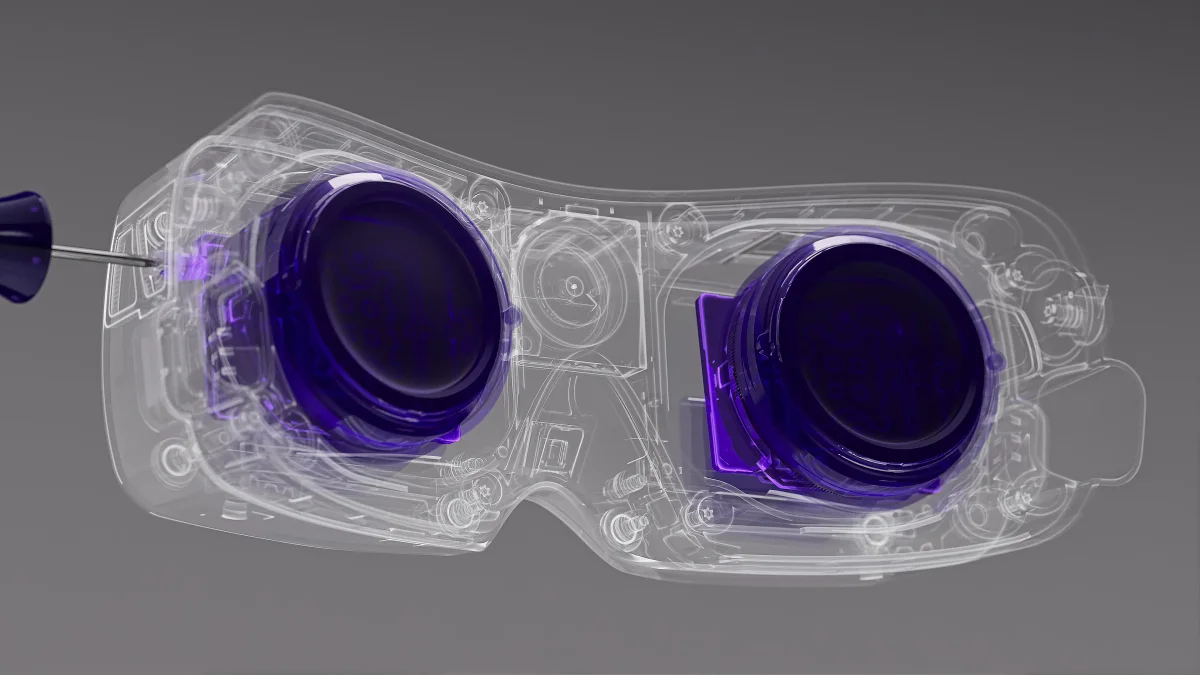
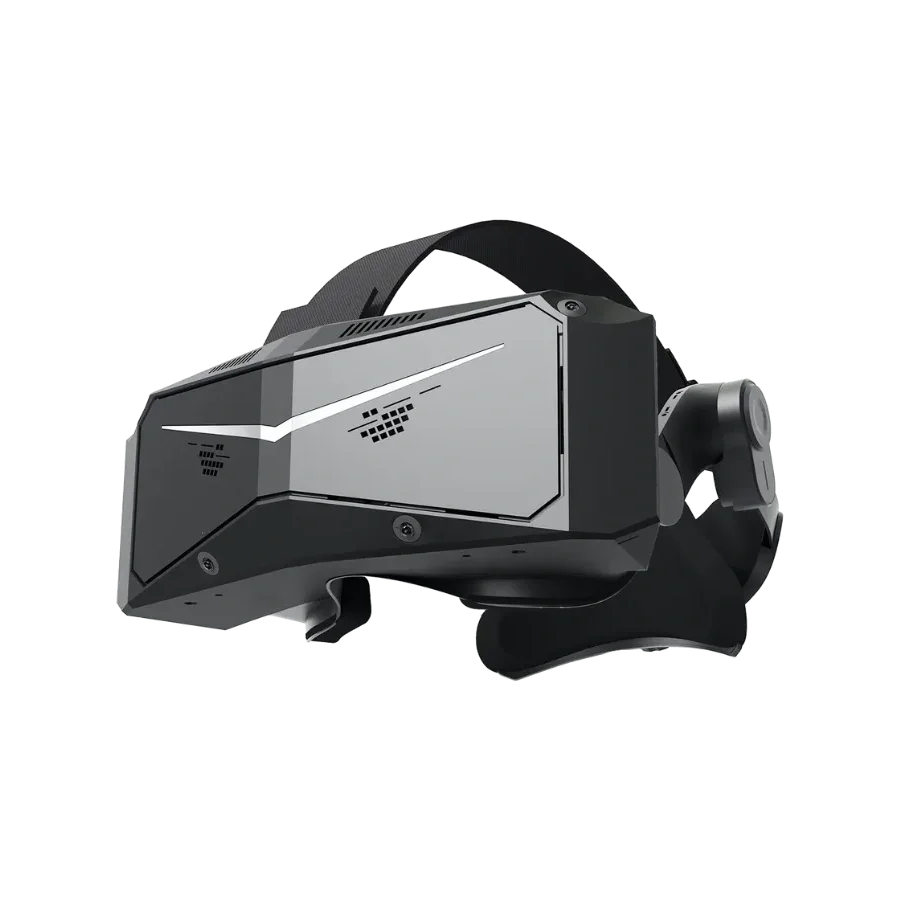
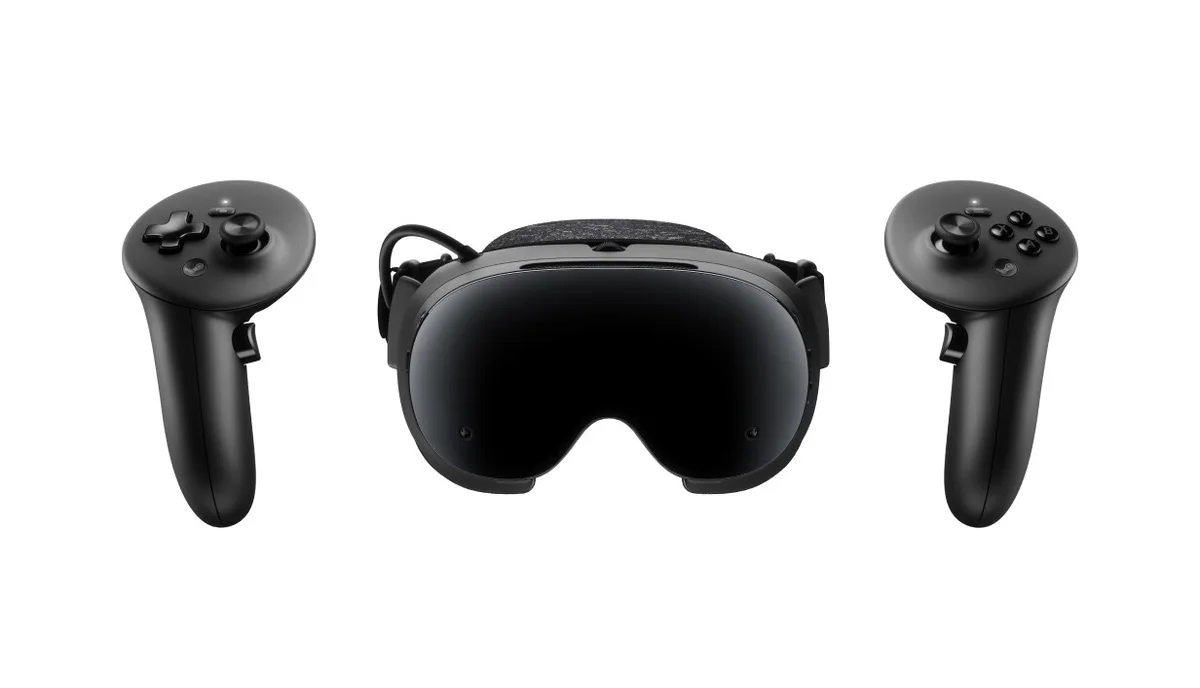
The two products in the same category with the closest price.
Clarity stated by Bigscreen: 2560 × 2560 pixels per eye over a 108° horizontal field of view. The higher the figure, the easier it is to read small cockpit labels and gauges.
A headset that light changes the question from "how long can I wear it?" to "how long is the flight?" The figure is for the headset only, without strap or cable, but even so it's in a different class from the Crystal Light's 815 g.
The panels are micro-OLED with a stated 500,000:1 contrast, so night approaches get real blacks. Clarity is 32 PPD at peak, on 2560 × 2560 pixels per eye, over a 108° × 96° field of view. Good, not record-breaking.
This is a Lighthouse headset: at least one SteamVR base station, 1.0 or 2.0, is required and not included, and Bigscreen doesn't sell them. The PC side needs DisplayPort 1.4 with DSC, through the Link Box and a 5 m fiber-optic cable.
The price shown is the $899 headset plus the $60 Universal-Fit Light Seal; the Custom-Fit Cushion version, based on a 3D face scan from an iPhone XR or newer, is $1,019. Glasses don't fit: magnetic prescription inserts are $89.
Points taken from the official manufacturer spec sheet.
PC VR headset (wired). Connection: DisplayPort 1.4 with DSC + 2× USB 3.0, through the Link Box and a 5 m fiber-optic cable. Tracking: SteamVR Lighthouse: at least one base station 1.0 or 2.0 required, not included. In the box: headset with Soft Strap, Link Box and fiber-optic cable. Per-eye IPD adjustment; glasses do not fit (magnetic prescription inserts sold separately, $89).
US price checked on October 29, 2026: $959. Price shown = headset $899 + Universal-Fit Light Seal $60, the cheapest face interface (one must be chosen at checkout). SteamVR base stations and controllers are not included, and Bigscreen does not sell them. Versions: With the Universal-Fit Light Seal: $959 (scored here); With the Custom-Fit Cushion (3D face scan on iPhone XR or newer, default option on the page): $1,019. Linked merchant: Bigscreen. The price at the merchant is the one that applies.
Crystal Light vs Beyond 2 is the close call: the Crystal Light is $60 less, with 35 PPD, inside-out tracking and controllers, at 815 g. Beyond 2 vs Crystal Super QLED is the clarity question, for $640 more.
Want eye tracking? It can't be added later, so decide now: the Bigscreen Beyond 2e is $200 more. The VR for flight sim guide covers base stations in plain words.
The Beyond 2 is the headset for pilots who fly long and fly with real controls: 107 g, micro-OLED and a DisplayPort link, $959 at Bigscreen on October 29, 2026.
Count the base stations in your budget, then check today's price.
Official store
Weighted average of the criteria: raw score 8.1/10, which is 9.0/10 on our editorial scale.
Weight: 25% of the overall score
Weight: 15% of the overall score
Weight: 15% of the overall score
Weight: 15% of the overall score
On paper, the Bigscreen Beyond 2 offers 32 pixels per degree (2560 × 2560 per eye), a 108° horizontal field of view, a direct DisplayPort video link from the PC, without the video compression used by Wi-Fi or USB streaming. Bigscreen notes that flight sims can be played without VR controllers, with a HOTAS. PC flight sims such as Microsoft Flight Simulator 2024, X-Plane 12 and DCS World run in VR through OpenXR or SteamVR: check the VR requirements of your sim before buying. This is a spec-sheet comparison, not a hands-on test.
Bigscreen states 32 PPD with 2560 × 2560 pixels per eye. Pixels per degree (PPD) measure how many pixels cover one degree of your view: the higher the figure, the easier it is to read small gauges, switch labels and the text on flight displays without leaning in.
DisplayPort 1.4 with DSC + 2× USB 3.0, through the Link Box and a 5 m fiber-optic cable. The headset receives the video signal directly from the graphics card.
Yes. SteamVR Lighthouse: at least one base station 1.0 or 2.0 required, not included. Budget for base stations on top of the price shown if you do not own any.
Yes: your HOTAS, yoke and rudder pedals connect to the PC, not to the headset, so any PC flight control works alongside it. The Bigscreen Beyond 2 ships without VR controllers, which flight sims flown with physical controls can do without. In VR you cannot see your hands, so controls you can find by feel help.
The Bigscreen Beyond 2 scores 9.0/10 ("Excellent") in the VR headset category, ranking 4 of 12. The score is calculated from the official specs and the checked US price, with no hands-on test.
The US price checked on October 29, 2026 is $959. It may have changed since.
We link to Bigscreen. The links go straight to the merchant.
No. This page is a spec-sheet comparison, not a hands-on test: we have not handled the product. All information comes from the official Bigscreen spec sheet and dated US prices.
With your consent, we use Google Analytics to measure the site's audience. If you decline, no measurement cookie is set. Learn more